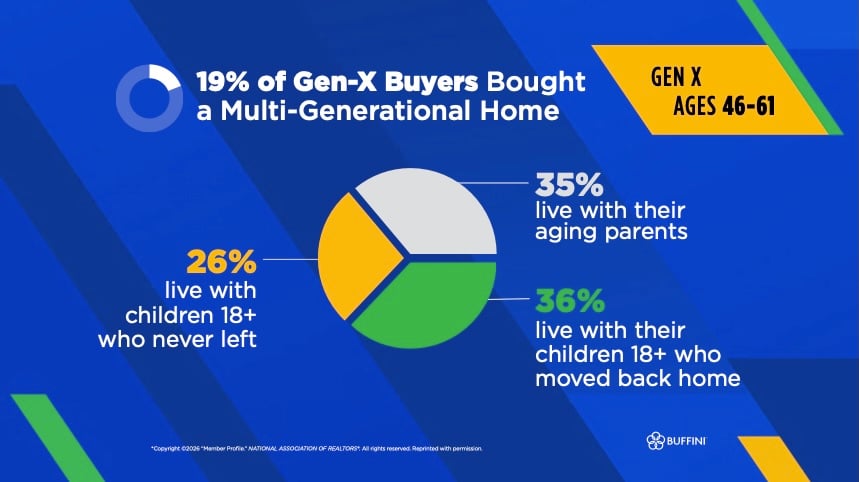
Quick answer: New data from the National Association of Realtors shows that 19% of Gen-X buyers (ages 46 to 61) purchased a multigenerational home. Within that group, 35% are housing aging parents, 36% have adult children who moved back home, and 26% have adult children who never left. For anyone in Colorado Springs weighing a sale or a purchase, this shift changes what "the right home" actually looks like.
What's driving this trend?
Gen X sits in a unique position. Many are caring for aging parents while their own adult kids are staying home longer, whether that's due to the cost of independent housing, career transitions, or simply choosing to save money before moving out. A single-family home that works for a household of four in 2015 often doesn't work for a household that now includes a parent or a returning adult child.
What this means if you're thinking about selling
If your home has features that support multiple generations, a basement with a separate entrance, a finished lower level with its own kitchenette, a main-floor bedroom and bath, or simply enough square footage and privacy to separate living spaces, that's a genuine selling point right now, not just a bonus room. Buyers are actively searching for this. Highlighting flexible layout in your listing description and photos can widen your buyer pool in a market where showing activity is the metric that matters most.
I'm already seeing this play out locally. Multigenerational sales, where a homeowner is selling because their household has grown or changed shape, are starting to show up more often in Colorado Springs and Monument neighborhoods, not just in the national data.
It's also worth asking yourself the same question these buyers are asking: does your current home still fit your household? Some sellers move because they've outgrown a house. Others move because their household has changed shape entirely, more people, not fewer, and staying put means friction rather than fit.
What this means if you're wondering whether now is a good time to buy
If you're a Gen-X buyer weighing whether to combine households with a parent or an adult child, you're not making an unusual choice. You're part of a fast-growing and fairly mainstream buying pattern. Combining resources across generations can meaningfully change what's affordable, since a larger purchase price can sometimes be offset by shared costs of ownership.
The practical part is matching the home to the arrangement. A house with a true accessory layout, separate entrance, or dual living space functions very differently day to day than one where everyone shares the same kitchen and hallway. That distinction matters more for long-term household harmony than square footage alone.
Frequently asked questions
What percentage of Gen-X buyers purchased a multigenerational home?
19%, according to the National Association of Realtors' most recent Member Profile data.
What's the most common reason Gen-X buyers choose a multigenerational home?
Among Gen-X multigenerational buyers, 36% have adult children who moved back home, 35% are housing aging parents, and 26% have adult children who never left.
Does a multigenerational layout add value when selling a home?
It can, particularly to a growing segment of buyers actively searching for flexible or separated living space. The right marketing can put your home in front of that specific buyer pool.
Is buying a multigenerational home a good financial strategy right now?
It can improve affordability by sharing housing costs across more household income, but the layout and legal setup (title, financing, and long-term intentions) should be planned carefully with your agent and lender.