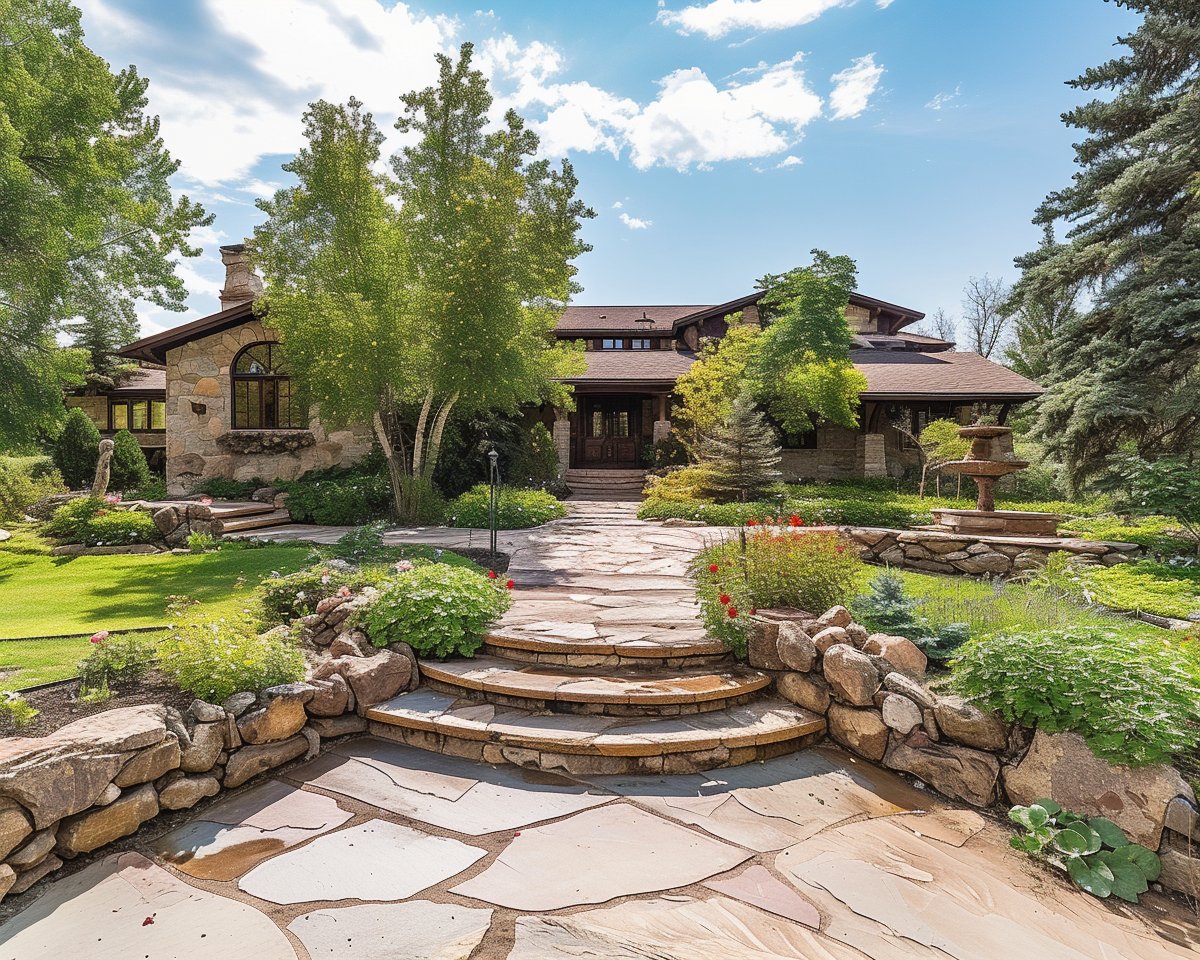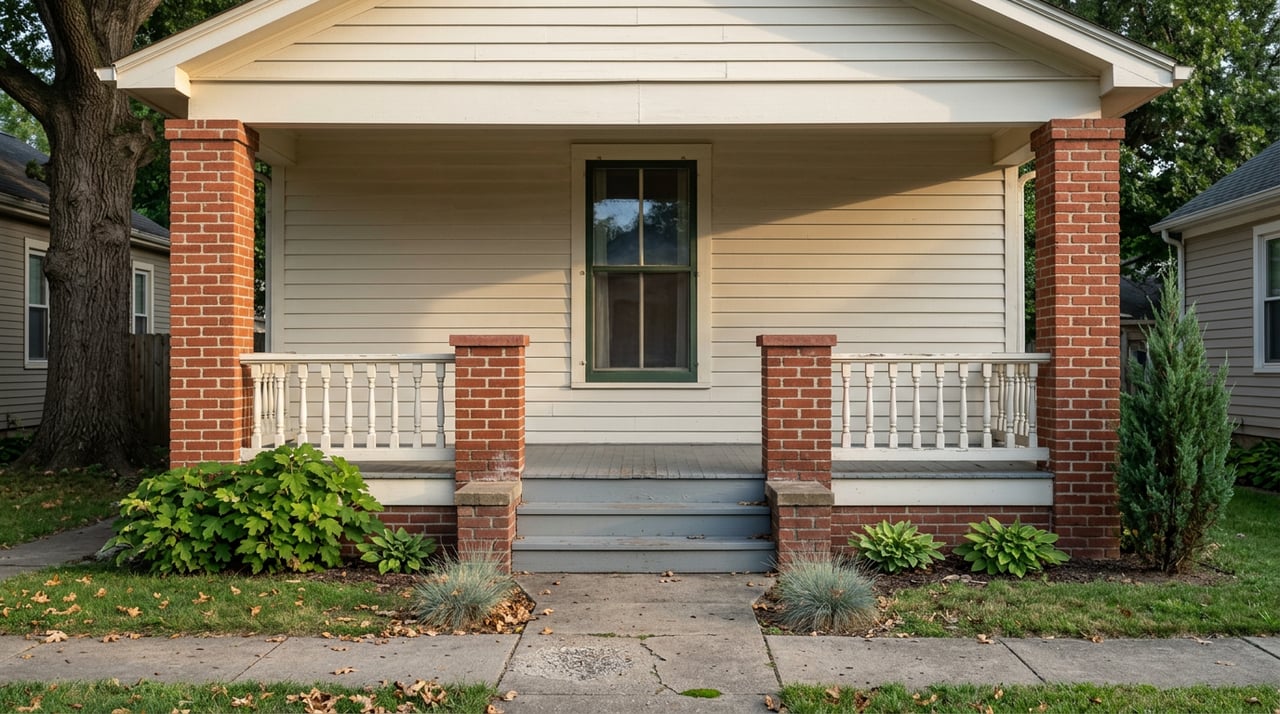
You write the offer. It gets accepted. You start picturing the porch rebuild, the kitchen bump-out, maybe finally replacing those single-pane windows that rattle every time a truck passes on Nevada Avenue. Then you learn that none of it happens the way it would two neighborhoods over. Before a contractor can touch the exterior, the project has to clear a city design review that has nothing to do with your homeowners association, because there isn't one in the way you'd expect.
This is the part of buying in Old North End that rarely makes it into a listing description. The price gets all the attention. The approval process is what actually shapes your first year of ownership.
The Overlay Most Listings Never Mention
A large portion of Old North End sits inside the city's Historic Preservation Overlay Zone. Inside that boundary, exterior changes or demolition require a "Report of Acceptability" from the city's Historic Preservation Board before a building permit is issued, and requests have to go through the Land Use Review Office, not through a homeowners association or a neighborhood email chain. The board's design standards were adopted by City Council, which means the rules carry the weight of city ordinance rather than a voluntary style guide.
There's a companion document, the Old North End Neighborhood's Interpretive Guide, that homeowners can use to understand how those standards apply to their specific house. It's genuinely useful for figuring out what an appropriate window profile or porch railing looks like on a 1905 Craftsman. But it's explicitly a support document. It carries no legal force on its own.
Staff have pointed out to City Council that this arrangement is unusual for Colorado Springs. Most design review in the city happens at the HOA level, negotiated among neighbors. Old North End is one of the only places where the review runs through a city board, and it's the only district where the standards are written to protect sightlines and views, not just materials and setbacks.
What Actually Needs a Sign-Off
Not every project in the district triggers a review. The distinction comes down to whether the work is visible from the public right of way and whether it requires a building permit in the first place.
| Project | Requires HPB Review | What to Know |
|---|---|---|
| Re-roofing | Yes | Requires a Regional Building permit plus prior Historic Preservation Board approval. The Development Review Enterprise office (719-385-5982) handles the permit side. |
| Replacing a window in its existing opening | No | Skips both the permit and the design review, as long as the opening isn't enlarged or reduced and no new window is added. |
| A storage shed that doesn't need a building permit | No | Exempt from Historic Preservation Board review entirely. |
| An addition, new construction, or demolition | Yes | Needs a Report of Acceptability before any permit is issued. |
The pattern is straightforward once you see it: if the city would require a permit anyway, and the work is visible from the street, expect a design review layered on top of it.
The Association Isn't Who Approves Anything
It's worth being precise about who does what here, because the two organizations get confused constantly. The Old North End Neighborhood association, known as ONEN, is a volunteer group founded in 1957. It doesn't collect mandatory dues the way an HOA would, and it has no authority to approve or deny a renovation request. Its role is advocacy, history, and community events, not permitting.
The actual approving body is the city's Historic Preservation Board, and its scope is narrow by design. As the board's own guidance puts it, the board evaluates design only. It isn't reviewing your floor plan or your contractor's license. It's checking whether the exterior work is consistent with the adopted standards for the district.
How settled are those standards? In 2021, during Colorado Springs' sesquicentennial year, City Council revisited the North End's design standards after some members had pushed to soften them. The council voted unanimously to keep them in place. ONEN's president at the time, Dutch Schulz, called the outcome surprising, saying the group had expected a split vote. If you're buying here expecting the rules to loosen soon, the most recent test of that question went the other way.
The Boundary Line You Can Watch in Real Time
The clearest illustration of where the overlay ends showed up last fall, a few blocks from the district's edge. Silver Key, the local senior services organization, proposed a 47-unit apartment complex for low-income seniors on a vacant lot at the corner of North Weber and East Madison, land that had sat empty for four years. Silver Key's CEO, Jason DeaBueno, said the project is aimed at residents 62 and older, and the organization has roughly 400 people on its waitlist for senior housing. The company hopes to finalize plans and financing by mid-2026.
What matters for a buyer scanning listings nearby is this: the lot sits just outside the neighborhood's historic preservation zone, so the project isn't subject to the same historical design review that would apply a block or two further in. Two properties can sit close enough to share a mail carrier and follow completely different rulebooks. If you're evaluating a home near the district's edge, don't assume its status based on the neighborhood name alone. Confirm the specific address against the overlay boundary before you plan any exterior work.
Why the "Median Price" You Saw Online Barely Means Anything Here
If you've been comparing Old North End listings across a few different sites, you've probably noticed the numbers don't agree with each other, and not by a small margin. In March 2026, one listing aggregator put the neighborhood's median home price at $599,900, with a trailing 12-month median sale price of $572,500, down 15 percent from the year before. Checking a different source this August turns up a median closer to $982,000, based on the roughly 30 homes currently listed.
That's not a market swinging wildly in five months. It's a small, architecturally uneven inventory producing a different median depending on exactly which handful of houses happen to be for sale when you look. Old North End's housing stock runs from turn-of-the-century bungalows to Spanish Colonial Revival estates built during the Cripple Creek gold boom, styles that History Colorado notes span from 1885 to 1965 under a single historic designation. With only a few dozen active listings at any given time, one large estate or one modest starter home coming onto the market can move the median by six figures without a single home actually changing in value.
The practical takeaway: don't anchor your budget to a headline median for this neighborhood. Ask your agent for comparable sales filtered by square footage and construction era, since that comparison holds steadier than a median built from a handful of very different houses.
Before You Write the Offer
A short list worth working through before you're under contract on a specific address:
- Confirm whether the property sits inside the Historic Preservation Overlay Zone. Don't assume based on the street name or neighborhood boundary alone, especially near the edges.
- If it's inside the zone, ask what a Report of Acceptability would involve for the specific work you're already planning, whether that's a kitchen addition, a porch rebuild, or a new garage.
- Ask about the Colorado Tax Credit for Certified Rehabilitation program, which uses the Secretary of the Interior's Standards for Rehabilitation to determine eligibility. It can offset some restoration costs on qualifying work.
- Budget time, not just money, for exterior projects. A review step that most other Colorado Springs neighborhoods simply don't have adds a layer to your renovation timeline that a standard remodel elsewhere wouldn't need.
A Few Questions Worth Settling Early
Does every home in Old North End require historic review before a remodel? Only exterior work that's visible from the public right of way and would otherwise need a building permit. Interior renovations and unaffected exterior features like straightforward window swaps generally don't trigger a review.
Is ONEN the same as a homeowners association? No. ONEN is a volunteer neighborhood association with no mandatory dues and no permitting authority. The Historic Preservation Board, a city body, is the one that reviews and approves exterior design changes.
What if my target property is just outside the historic boundary? Then the design review requirements don't apply, as the Silver Key project on North Weber and East Madison illustrates. Confirm the exact boundary for any address you're considering, since it can change block by block.
Buying in a historic district rewards patience and specificity more than it rewards chasing the lowest median price you can find online. If you're weighing a purchase in Old North End or comparing it against other Colorado Springs neighborhoods, Nicole Strom can walk through the overlay boundary, the renovation timeline, and what your budget actually buys before you write an offer. Start Your Move — Request Your Free Relocation Guide.