If you've been following the housing market, you've probably heard a lot about mortgage rates, rising inventory, and buyers gaining negotiating power.
What hasn't received as much attention is what may be one of the most important long-term housing trends unfolding right now.
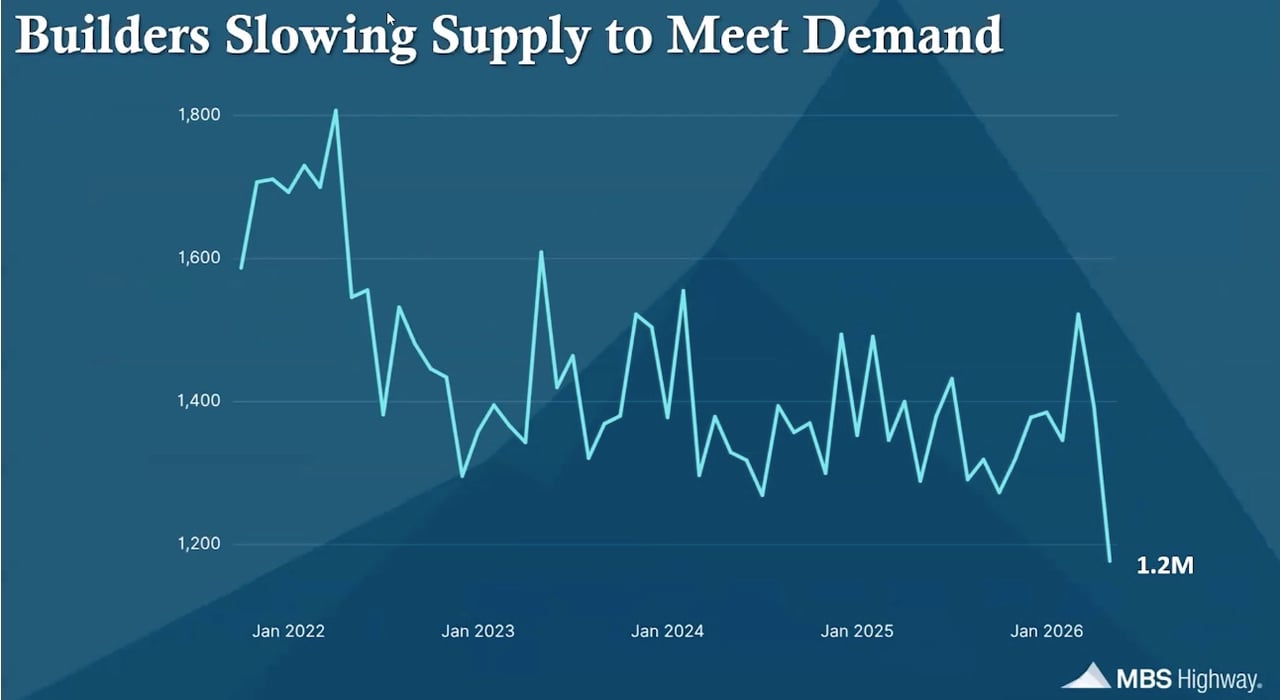
Builders are reducing new home construction at the same time household formation is beginning to accelerate.
In simple terms, fewer homes are being built while more people need places to live.
The Supply Side Is Shrinking
Recent housing data shows builders have reduced housing starts from roughly 1.8 million units annually in early 2022 to approximately 1.2 million units today.
Builders are facing higher labor costs, construction costs, financing challenges, and slower buyer activity caused by elevated mortgage rates.
Rather than risk overbuilding, many are intentionally slowing production.
While that may make sense for builders, it also means fewer homes will be entering the market over the next several years.
The Demand Side Is Growing
At the same time, household formations have increased to roughly 1.65 million annually.
Household formation occurs when people:
• Get married
• Get divorced
• Move out on their own
• Relocate for work
• Start families
• Leave shared housing situations
Housing demand ultimately comes from people needing a place to live.
Today, demand is beginning to outpace new housing supply.
Why Tomorrow Matters
Tomorrow we will hear from the new Federal Reserve Chairman.
The market is not necessarily expecting an immediate change to interest rates. What investors, lenders, and consumers will be listening for is guidance on where the economy and inflation may be heading.
Mortgage rates often react more to expectations than actual Fed decisions.
A favorable outlook could help improve buyer confidence. A more cautious outlook could create hesitation.
Confidence Drives Housing Activity
One thing I have learned throughout my real estate career is that confidence often shows up before contracts.
When consumers feel optimistic about:
• Their employment
• The economy
• Inflation
• Global stability
• Their financial future
They are more willing to make major financial decisions.
Recent progress toward a potential U.S.-Iran agreement has helped reduce some global uncertainty. Whether that trend continues remains to be seen, but consumer sentiment matters.
In real estate, confidence typically appears first through showing activity.
Before offers increase, showings increase.
Before contracts increase, showings increase.
Before closings increase, contracts increase.
What I'm Watching Right Now
As we move through the remainder of 2026, I am watching three key indicators:
- Showing activity throughout El Paso County
- Mortgage rate movement following Fed announcements
- New home construction trends and inventory levels
These indicators will tell us a great deal about where the housing market may be heading over the next six to twelve months.
What This Means for Colorado Springs and Monument
Locally, inventory has increased compared to the pandemic years, giving buyers more options and negotiating power.
At the same time, housing demand remains strong, military relocations continue, and builders are becoming more cautious.
For buyers, waiting for rates to fall may also mean competing against more buyers.
For sellers, strategic pricing and concessions remain effective tools for attracting buyers while protecting equity.
The market is becoming more balanced, but the long-term supply shortage has not disappeared.
The housing market remains driven by one simple principle:
When demand grows faster than supply, prices tend to remain resilient.
My Take for Colorado Springs and Monument
Locally, I am already seeing many buyers move forward when sellers offer concessions that help reduce their monthly payment through rate buydowns or closing cost assistance. In my own 2026 transactions, seller concessions have helped 14 families successfully purchase a home, with more than $206,000 contributed by sellers.
Tomorrow's Fed meeting may not immediately change mortgage rates, but it could absolutely change expectations. And expectations often influence buyer confidence, showing activity, and ultimately housing demand.
The housing market is as much about psychology as it is about economics. Right now, both deserve our attention.